
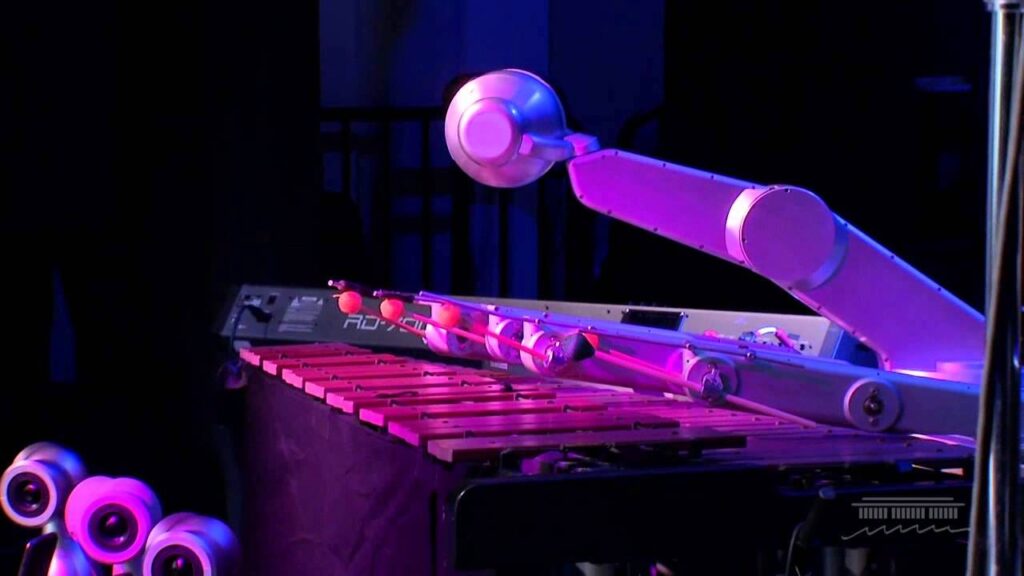
Robots have been known for their precision, perfect timing, exact movements, and flawless execution. But in music, the magic often comes from the imperfections, the subtle hesitations, dynamic swings, and human touch that give a song its soul. Now, a new generation of robotic drummers is learning exactly that.
Teaching the Machines to Groove
Engineers and music technologists are training AI-powered robots to mimic human drumming patterns, not just in speed and rhythm, but in feel. Using advanced motion sensors, machine learning, and countless hours of recorded human performances, these robots are starting to replicate micro-timing variations and expressive flourishes that make live music sound alive. Some even improvise, responding to other musicians in real time.
Performances that sound less like mechanical click tracks and more like a seasoned drummer bringing a song to life. Bands are already experimenting with these “humanized” robots for live shows, installations, and even as collaborative songwriting partners.
Beyond the Beat
The same technology could help robots interact more naturally with humans in other fields—from rehabilitation therapy to education—by introducing nuance, unpredictability, and emotion into machine responses.
The Rhythm of the Future
What started as a novelty project for music labs could become a turning point in robotics. By learning to break the rules of perfect precision, robots may become better partners, creative, collaborative, and more in tune with the world around them.From the assembly line to the jam session, it turns out even machines can learn to swing.