Ever wonder why Lunar New Year doesn’t land on January 1st like the Western New Year?
It’s because it follows the lunar calendar, which is based on themoon’s cycles instead of the sun. Since a lunar year is about 10-12 days shorter than a solar year, the holiday shifts between January 21 and February 20 each year. To keep things aligned, a leap month is added every few years—think of it as the calendar’s way of keeping time with the cosmos! 🌙
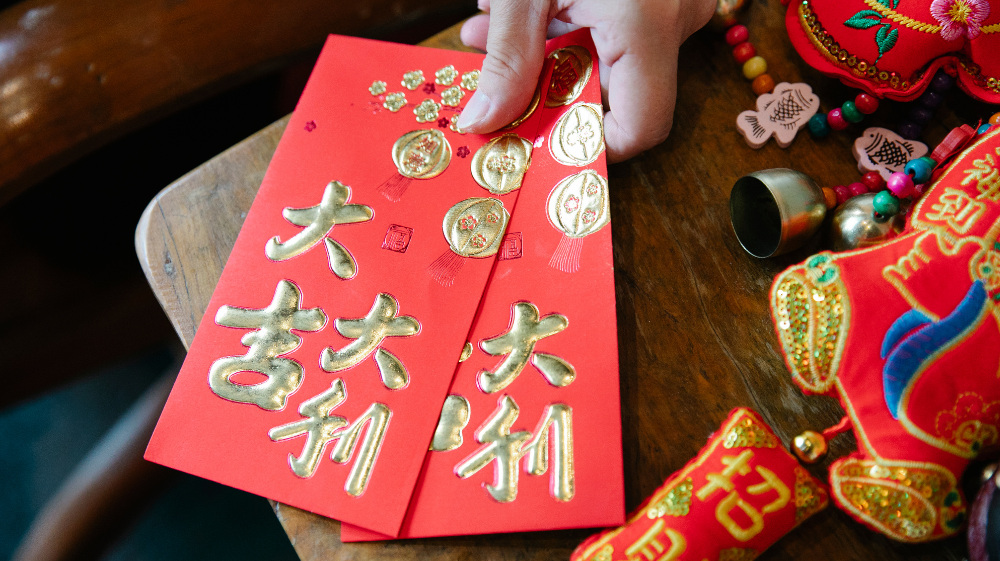
But Lunar New Year isn’t just about the date—it’s packed with centuries-old traditions and legends. In China, the festival is tied to the story of Nian, a mythical beast that terrorized villages until people discovered that fireworks and the color red could scare it away. That’s why modern celebrations are filled with firecrackers, lanterns, and red envelopes!
Across Asia, different cultures bring their own unique customs to the celebration:
🐉 Vietnam (Tết) – Families honor their ancestors, exchange lucky money, and feast on bánh chưng (sticky rice cakes).
🐉 Korea (Seollal) – People gather to pay respects to their elders with deep bows and eat tteokguk(rice cake soup), believed to bring good luck and add a year to one’s age!
One of the most universal traditions? Cleaning the house before the new year to sweep away bad luck and welcome good fortune. No matter how it’s celebrated, Lunar New Year is all about fresh starts, family, and prosperity.
So, whether you’re enjoying a feast, lighting fireworks, or greeting loved ones with “Gōng xǐ fā cái” (Mandarin) or “Chúc mừng năm mới” (Vietnamese), take a moment to embrace the joy and renewal this holiday brings.
🎊 Happy Lunar New Year! 🎊